
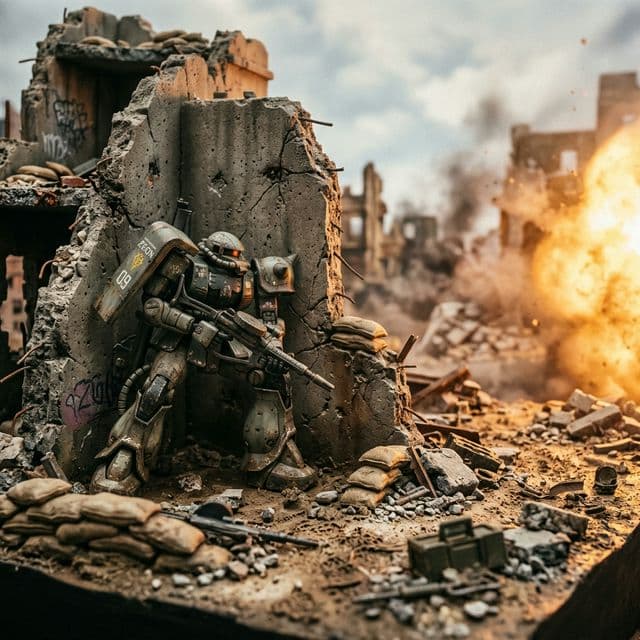
A beautifully built Gunpla looks great on a shelf, but placing it in a realistic diorama transforms it into a frozen snapshot of an intense anime battle.
Building a diorama is surprisingly accessible and uses standard modeling supplies.
1. The Base
Start with high-density XPS insulation foam (found at hardware stores). It's incredibly easy to carve, sand, and shape into hills or craters using a simple hobby knife.2. Texture
Coat the foam in a mixture of PVA glue, water, and fine sand or dirt. Once dry, you’ll have a rock-hard, realistic earth texture.3. Painting
Never use spray paint directly on raw foam—the propellants will melt it! Instead, paint the dirt with cheap acrylic craft paints. Start with a dark brown base coat, and then lightly "dry brush" lighter tan colors across the raised textures to simulate dust and highlights.4. Details
To bring the scale to life, add 1/144 scale miniature accessories. Railroad modeling supplies are fantastic for this—model train trees, grass tufts, and tiny buildings look perfectly scaled next to an HG or RG Gundam.Throw your kit into a dramatic, low-crouching pose behind some rubble, and you've elevated your display to a work of art!
Related Dispatches
How to Safely Remove Nub Marks Without Damaging Plastic
Say goodbye to ugly white stress marks! Master the double-cut method and glass file techniques for flawlessly clean armor pieces.
Scribing New Panel Lines: Tools and Techniques
Turn a plain, flat piece of armor into a mechanical masterpiece. Learn how to confidently scribe your own custom panel lines.
Panel Lining Techniques: Achieving that Pro Finish
The fastest way to make a plastic model look like a real machine. Learn the fundamental techniques of panel lining using fine-tip markers and pour-type washes.